
Building a Shopify Multi-Seller Marketplace with Marketplacer Integration
Connecting Shopify with a scalable multi-vendor marketplace infrastructure.
Project Overview
Shopify operates primarily as a single-merchant ecommerce platform, where each store represents one seller.
However, modern marketplaces require a multi-vendor architecture, where multiple sellers can list products and fulfill orders through a unified platform.
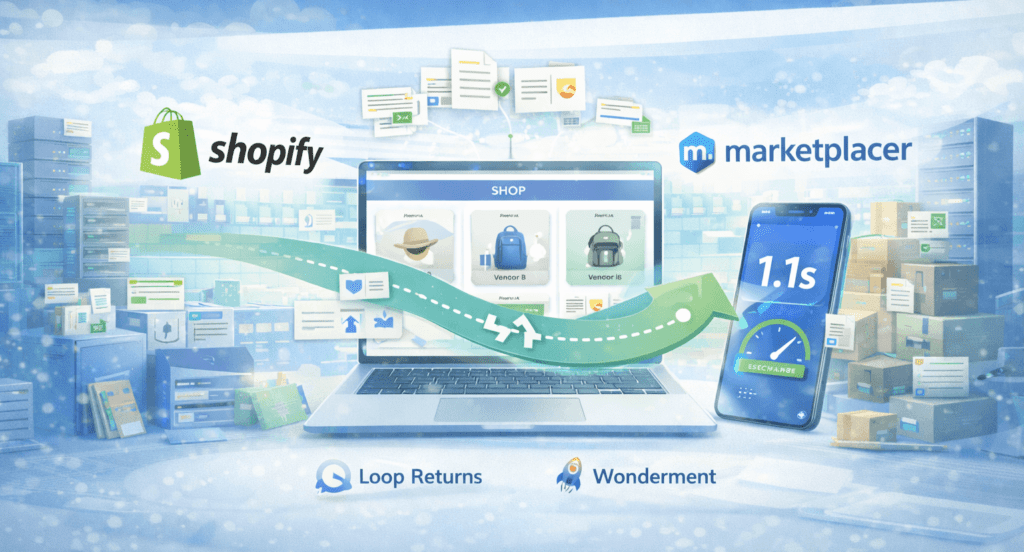
To support this business model, a Shopify store required integration with Marketplacer, a marketplace platform designed to manage multiple vendors, product catalogs, and fulfillment workflows.
The objective was to build a fully integrated multi-seller marketplace environment while ensuring accurate data synchronization, shipping logic, and operational workflows across both platforms.
Key Challenges
Platform Architecture Differences
Shopify is designed around a single-vendor model, while Marketplacer supports multi-vendor marketplace operations.
Bridging these two architectures required building a reliable integration layer capable of synchronizing marketplace data across both systems.
Multi-Location Seller Fulfillment
Marketplace sellers operated from multiple geographic locations, each with different shipping requirements.
Shopify’s native shipping configuration could not adequately support these complex fulfillment scenarios.
Shipping Profile Limitations
Shopify supports only a limited number of shipping profiles, which created challenges when managing shipping costs across multiple sellers and fulfillment locations.
This made accurate shipping calculations difficult within the native Shopify configuration.
Return and Refund Synchronization
The marketplace required synchronization between the storefront and the marketplace backend for:
• Returns
• Refund processing
• Order lifecycle updates
Native workflows were insufficient for this level of integration.
Data Synchronization
The system required reliable synchronization of:
• Seller data
• Product catalogs
• Order information
• Shipping logic
Maintaining consistency between Shopify and Marketplacer was essential for marketplace operations.
Solution
To address these challenges, a customized marketplace integration architecture was implemented.
The integration was built using the Amitech Marketplacer Connector, which served as the primary data exchange layer between Shopify and Marketplacer.
Additional tools were implemented to enhance the overall marketplace experience.
Key components included:
• Marketplacer integration for marketplace infrastructure
• Loop Returns for return request management
• Wonderment for shipment tracking and post-purchase communication
Marketplace Architecture Improvements
Seller and Product Mapping
Seller accounts, product data, and operational workflows were mapped between Shopify and Marketplacer to support the multi-seller marketplace model.
This ensured accurate data exchange between the storefront and marketplace platform.
Custom Shipping Logic
A custom shipping solution was developed to manage fulfillment across multiple seller locations.
The system dynamically calculated shipping costs during checkout using data from Marketplacer.
This allowed orders from multiple vendors to be processed accurately.
Returns Management
Loop Returns was integrated to enable customers to submit return requests directly from the storefront while maintaining synchronization with the marketplace administration panel.
Shipment Tracking
Wonderment was integrated to improve shipment tracking visibility and provide customers with better delivery updates and post-purchase communication.
Bidirectional Data Synchronization
A custom connector was developed to enable bidirectional synchronization between Shopify and Marketplacer, including:
• Product data
• Order lifecycle updates
• Return and refund workflows
This ensured consistent data across both platforms.
Results
The integration successfully enabled a fully operational multi-vendor marketplace built on Shopify infrastructure.
Key outcomes included:
Marketplace Functionality
• Support for multi-seller fulfillment across multiple locations
• Dynamic shipping calculations across vendors
• Accurate marketplace order processing
Operational Efficiency
• Automated return and refund workflows
• Reduced manual operational effort
• Improved data accuracy
Platform Integration
• Seamless integration between Shopify and Marketplacer ecosystems
• Near real-time marketplace data synchronization
Scalability
The marketplace architecture provided a scalable infrastructure capable of supporting marketplace growth and additional sellers.
The solution effectively bridged the functional gap between Shopify and Marketplacer, enabling a cohesive multi-vendor marketplace experience.
Planning a Shopify Marketplace Architecture?
We help ecommerce platforms integrate Shopify with marketplace infrastructure, build scalable multi-vendor ecosystems, and optimize ecommerce operations.